Ocean Networks Canada

Ocean Networks Canada

Search form

Facebook iconTwitter iconLinkedIn iconYouTube iconFlickr iconInstagram icon

Menu

  • About Us
    • About Us
    • Jobs & Opportunities
    • Events & Workshops
    • Contact Us
    • Support Us
    • Organization
      • Leadership
      • Staff
      • Boards
      • Committees
    • Funders & Partners
      • Funders
      • Partners
  • Science
    • Science
    • Active Research
    • Highlights
    • Science in the News
    • Science Plan
      • Summary
      • Science Themes
    • Publications
      • General Interest
      • Academic
    • Getting Involved
      • Proposals
      • Workshops
      • Conferences
  • Innovation Centre
    • Innovation Centre
    • About the Innovation Centre
    • Success Stories
    • Contact Us
    • Smart Ocean Systems
      • Sensors and Instruments
      • Technology Demos
      • Ocean Observing Systems
      • Earthquake Early Warning
    • Partners & Networks
      • Industry Network
      • Global Partnerships
      • R&D Support
      • Students in Industry
    • Atlantic Partners
  • Learning
    • Learning
    • Learning Blog
    • Learning Highlights
    • Learning Events
    • Partnerships
    • Contact Us
    • Ocean Sense
      • Community Observatories
        • Cambridge Bay
        • Campbell River
        • Kitamaat Village
        • Mill Bay
        • Prince Rupert
      • Teacher Info
      • Student Info
      • Resources & Lessons
    • Get Involved
      • For Students
        • For Undergrads & Grads
      • For Educators
        • Educator Opportunities
      • For Communities
      • Ship2Shore
      • Citizen Science
        • Coastbuster
        • Digital Fishers
    • Resources
      • Educator Resources
      • Ocean Alive!
      • Oceanography 101
      • About the Observatories
      • Research Ideas
      • Student Reports
  • Observatories
    • Observatories
    • Arctic
    • Atlantic
    • Pacific
    • Mobile Platforms
    • Infrastructure
      • Data Facilities
      • Platforms
      • Devices & Sensors
      • Cables & Connectors
    • Expeditions
      • Wiring the Abyss
      • Expedition Logs
      • Maintenance Processes
    • Notices
      • Information for Mariners
      • By the Numbers
      • Alerts
  • Data & Tools
    • Data & Tools
    • Highlights
    • Data Quality
    • Preview & Download
      • Preview & Visualize
      • Data Download Tools
      • State of the Ocean Plots
      • Ocean Report Card
    • Apps & Services
      • Mobile Apps
      • OPeNDAP Web Services
      • Related Sources
      • Earthquake Data Dashboard
    • Data Help
      • Usage Policy
      • Tutorials & Help Pages
      • Request Help
  • Sights & Sounds
    • Sights & Sounds
    • Terms of Use
    • Video
      • Live Video
      • Video Highlights
      • Video Archives
    • Images
      • Maps
    • Audio
      • Live Audio
      • Audio Highlights
      • Audio Archive
  • News
    • News
    • Briefs
    • Stories
    • Newsletters
    • Calendar
    • Media Relations
      • Backgrounders
      • Downloads
      • In the News
      • News Releases
      • Media Contacts

About Us

You are here

  1. Home
Sep 29, 2015

A Conversation with ONC Visiting Scholar, Dr. Tom Kwasnitschka

Many of our colleagues are oceanographers, ocean scientists, biologists, geophysicists, etc. How would you describe your specialized profession?

I would say I am a deep sea volcanologist, seafloor surveyor and science visualizer.

Tom, during a 2013 expedition to visually survey Axial Seamount with the Monterey Bay Aquarium Research Institute

Did you have a moment in your childhood when you knew what professional direction your life would take? Did you have a “fall in love with the ocean” moment?

I probably have to cite the usual influences like 20,000 Leagues Under the Sea, Jacques Cousteau, and Bob Ballard (yes, I am that young). But I knew pretty much at age 15 that I wanted to do what I do now.

What path led you to choose robotics and data visualization (projected video environments/virtual reality/3D photogrammetry) in a marine environment?

First, I wanted to be a submarine engineer, but I am bad at math. Then I wanted to become a submarine captain, but naval subs have no windows. So I ended up as a scientist, which is more agreeable and I got those windows.

You have a variety of exciting research interests. Is there a central theme that links them all?

My goal is to provide the highest possible detail of the seafloor. Doing so seems to be most rewarding at deep sea volcanoes.

What makes you most excited about your research, or your future direction?

The great challenge we still face in marine geology is to actually transport ourselves to the seafloor. We now recreate the marine environment in virtual simulators that finally give us a feeling of our presence down there.

The ARENA simulator at GEOMAR in Kiel, Germany, surrounds the viewer with projected images that create a virtual deep sea environment.

What brings you to Ocean Networks Canada and the west coast of Canada?

The fact that ONC has yearly scheduled expeditions to the study sites is pretty unique and offers the chance to really exploit the potential of our high-resolution maps. At the same time, we can repeat those high-resolution surveys and follow intricate developments over time.

How have you used Ocean Networks Canada data and infrastructure to assist your research?

I went through ONC’s 2014 remotely operated vehicle video archives to identify past surveys that may be integrated and compared with this year’s extensive surveys. It was good preparation for the 2015 expedition that would be my first comprehensive mapping of key seafloor study sites using photogrammetry.

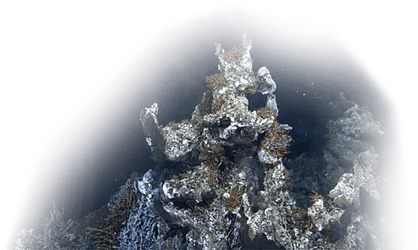
Tom’s 3D model of the Faulty Towers hydrothermal vent group on the Juan de Fuca ridge (from ONC 2014 data).

What was it like to be working aboard the E/V Nautilus, during Wiring the Abyss 2015?

It was awesome! The crew, the ship, even the weather was great, and we accomplished an impressive amount of photogrammetry: 46 hours and 22 minutes’ worth. That was spread over three dives and three major vent sites. The images were recorded in high-definition video that I then resampled at 1 image per second intervals. In all, about 100,000 images will be processed, separated into subprojects for the individual vent groups. We will start with the High Rise vent, and first results can be expected early next year. Our hope is that we will then use the models together with geologists and biologists in Canada and Germany to create 3D geological and habitat characterizations.

Tom oversees a photographic survey from the E/V Nautilus control room during one of the ROV dives at Endeavour.

Where do you see your research or research interests five years from now?

A tough question I ask myself every morning! I would like to be able to create larger maps, possibly using unsupervised hovering autonomous underwater vehicles or AUVs, but most importantly we have to prove what a great added value lies in photographic mapping and the virtual fieldwork taking place on the seafloor.


Read Tom's paper: Doing fieldwork on the seafloor: Photogrammetric techniques to yield 3D visual models

See Tom's stunning 3D images in this ONC profile video.

Tom Kwasnitschka | photogrammetry | hydrothermal vents | hot vents

Printer-friendly versionPDF version

Related Stories

Van Aqua takes audiences to extreme deep ocean environments
Oct 1, 2015

Endeavour's Complex Environment
Jun 19, 2013

Thompson Expedition heads for Endeavour Hot Vents
Jun 11, 2013

Endeavour Hot Vents Featured in State of the Ocean Series
Apr 19, 2012

Tempo-Mini Inhabits the Hot Vents
Nov 30, 2011

Calendar of Events

July 2017

  • « Prev  
  •   Next »
S M T W T F S
25
26
27
28
29
30
1


2
3
4
5
6
7
8


9
10
11
12
13
14
15


16
17
18
19
20
21
22


23
24
25
26
27
28
29


30
31
1
2
3
4
5


Newsletter

Sign up for our monthly e-newsletter:


Tweets Follow @Ocean_Networks

Tweets by @oceanetworks


Highlights

  • Audio
  • Data
  • Learning
  • Science
  • Video

Reading Room

  • Active Research
  • Backgrounders
  • FAQs
  • Glossary
  • News Briefs
  • News Stories
  • Newsletters
  • Publications

Cool Stuff

  • Apps
  • Digital Fishers
  • iBooks & e-Pubs
  • Live Video
  • Maps
  • Images
  • State of the Ocean

Data & Tools

  • Apps
  • Data Plots
  • Simple Download
  • Data Search
  • Data Policy
  • Data Help
  • OPeNDAP Web Services

Opportunities

  • Calendar
  • Educator Opportunities
  • Global Partnerships
  • Industry Network
  • Jobs
  • Staff List
  • Technology Services
  • Workshops

Sites & Instruments

  • Arctic Sites
  • Northeast Pacific Sites
  • Salish Sea Sites
  • Notice to Mariners

Follow Us

Facebook iconTwitter iconLinkedIn iconYouTube iconFlickr iconInstagram icon

Sign up for our newsletter

Feedback

By submitting this form, you accept the Mollom privacy policy.


About Us | Contact Us | Media Relations | Legal Notices

© Ocean Networks Canada. All rights reserved. P.O. Box 1700 STN CSC, Victoria, BC, Canada, V8W 2Y2 | 1.250.472.5400